Flowing Forward
Reconnecting Holyoke’s People and Water
Spring 2025
Thesis Vision & Project Goals
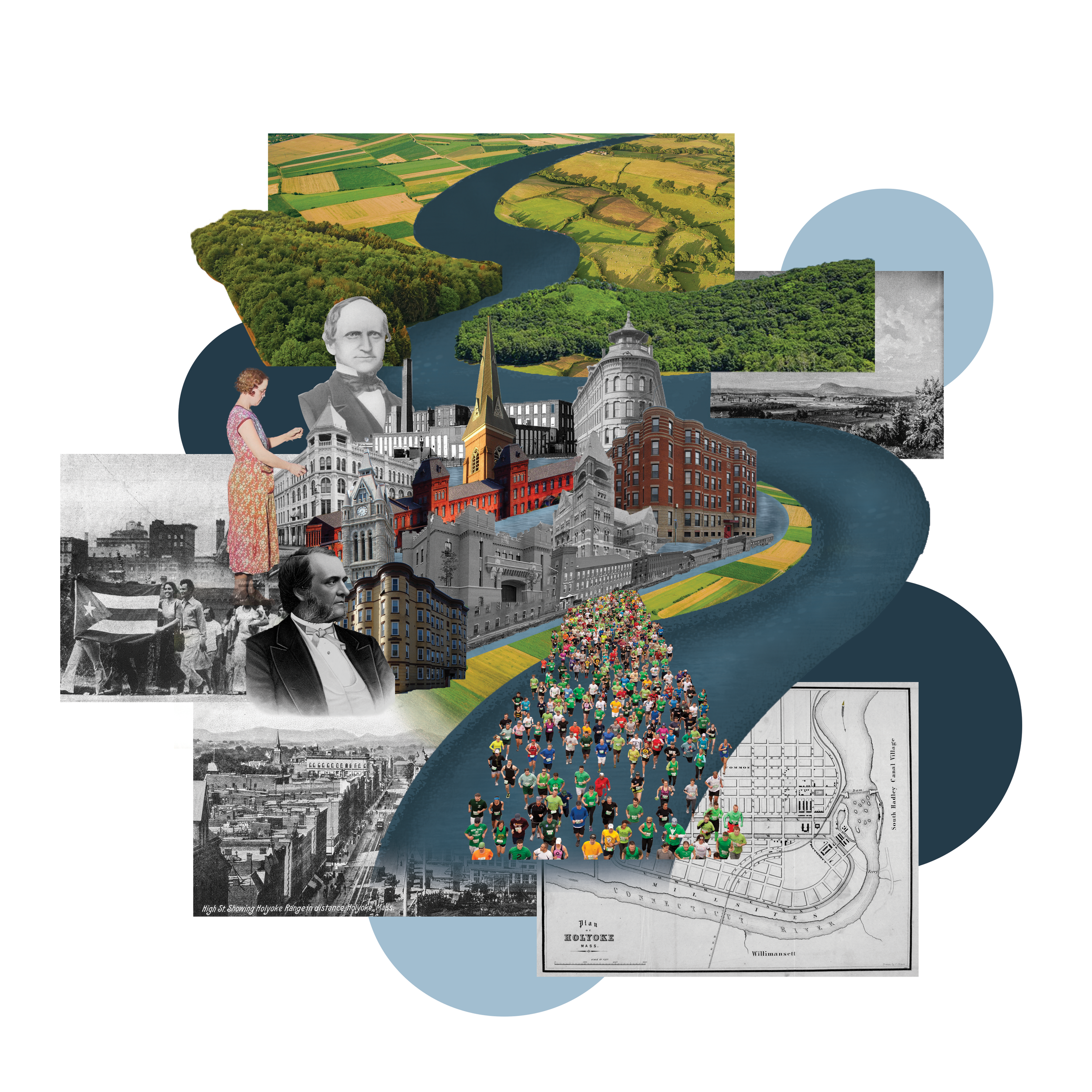
Developed during a 14-week solo thesis studio in spring 2025, this project explores how landscape design can reconnect the people of Holyoke, Massachusetts, with the waterways that have shaped the city’s identity. Once a thriving industrial center known as “Paper City,” Holyoke has experienced significant industrial decline, leaving much of its historic canal infrastructure underutilized and disconnected from everyday public life.
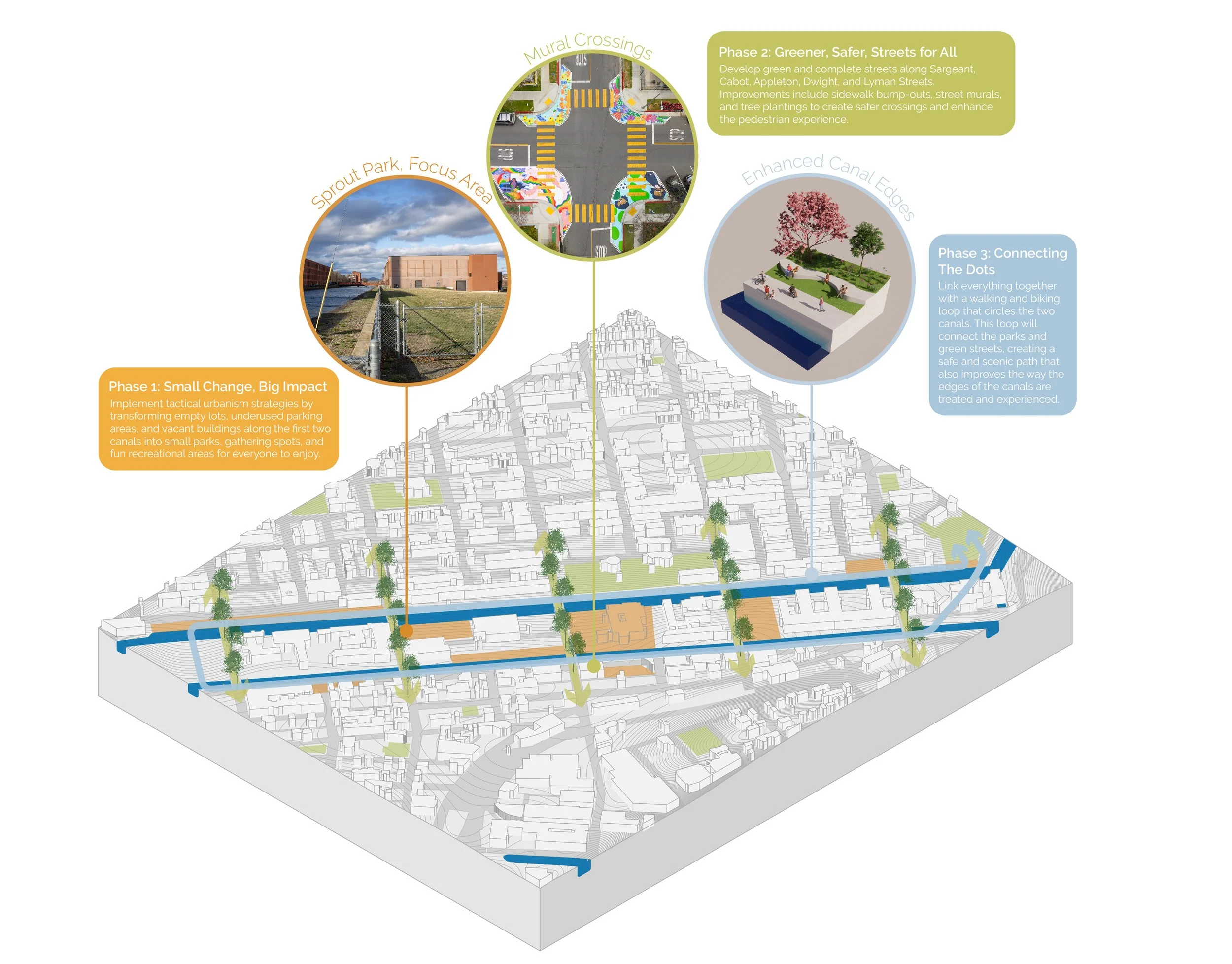
Through site analysis and historical research, I developed a phased vision to transform the canal system into an accessible, connected, and ecologically vibrant public landscape. The proposal focuses on establishing a continuous green corridor, creating inclusive access points to the water, and celebrating the canals’ industrial and cultural history. These goals are addressed through new canal-side parks, greener and safer street connections, and a proposed pedestrian and bicycle loop linking the canals to surrounding neighborhoods.
Project Goals Diagram
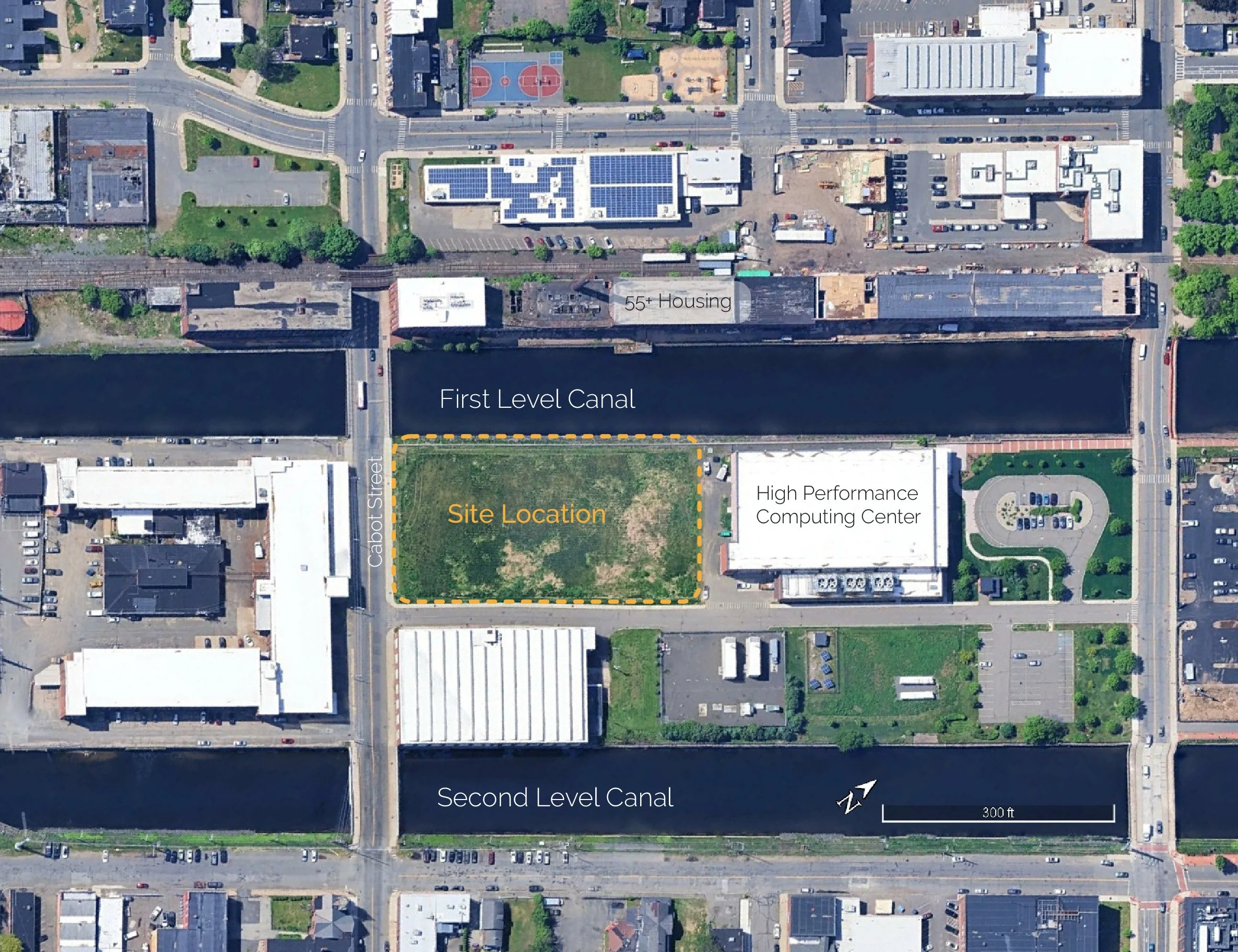
The work featured here highlights Sprout Park, a Phase 1 intervention on an underutilized lot along the first-level canal. The design transforms the site into a welcoming community destination through planting, gathering spaces, and opportunities to experience the waterway. Sprout Park represents one step toward a larger vision for reconnecting Holyoke with its industrial heritage, natural systems, and public spaces.
Graphics and visualizations created using Adobe Creative Suite, ArcGIS, Rhino, Enscape, and AutoCAD.
Sprout Park Context Map
Sprout Park: Design & Program
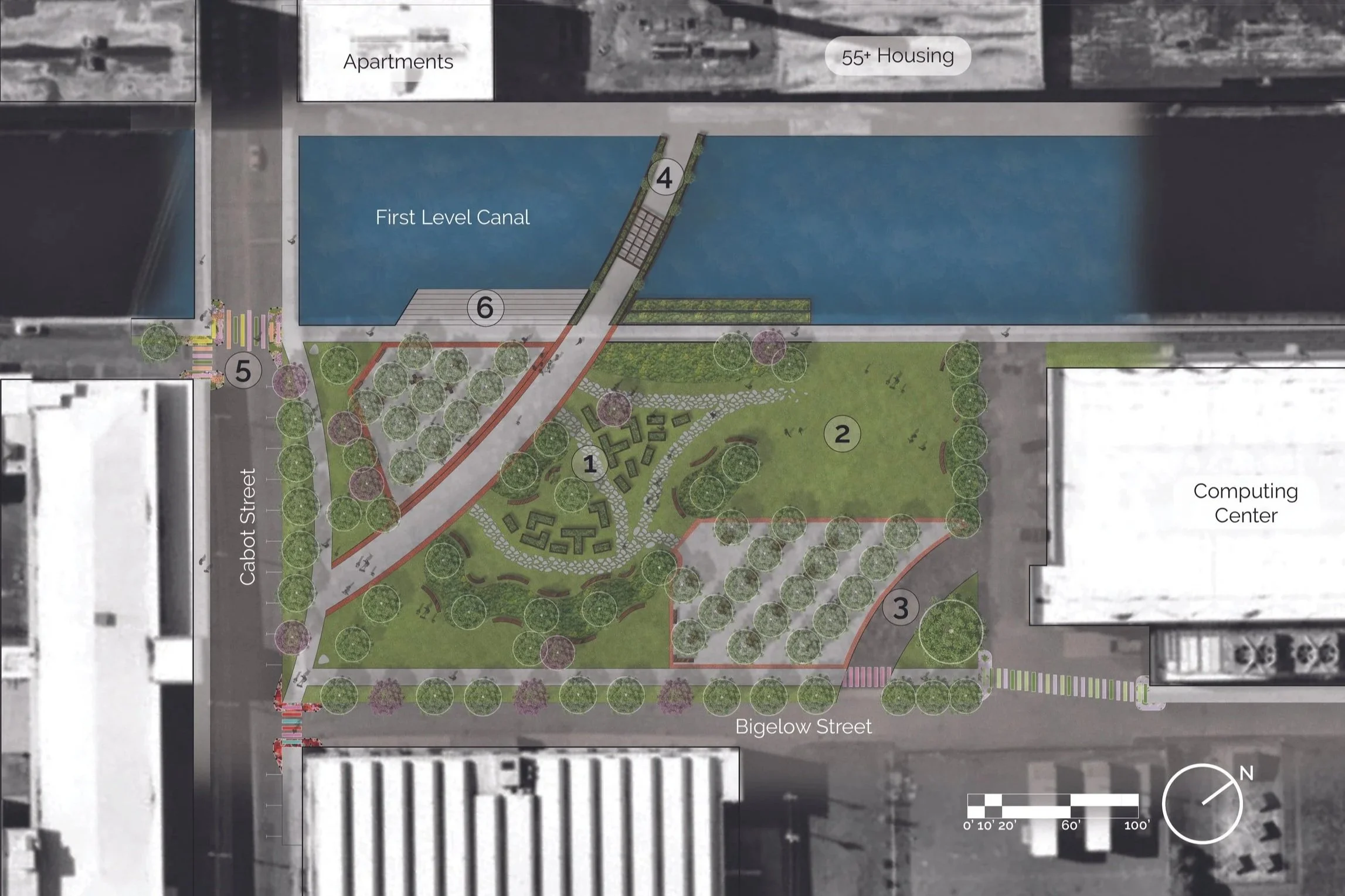
Sprout Park is proposed for a vacant lot along Holyoke’s first-level canal, adjacent to the High-Performance Computing Center. Across the canal, a new housing development will introduce approximately 500 units for residents aged 55 and older. With this future community in mind, the park prioritizes accessibility, comfort, and opportunities for social connection. Key features include a community garden, a central great lawn, a designated food truck area, a flowering pedestrian bridge, safer street crossings, and new access points to the canal. Together, these elements create an inviting, multigenerational public space that strengthens connections between the neighborhood and the waterway.
Honoring Holyoke’s History
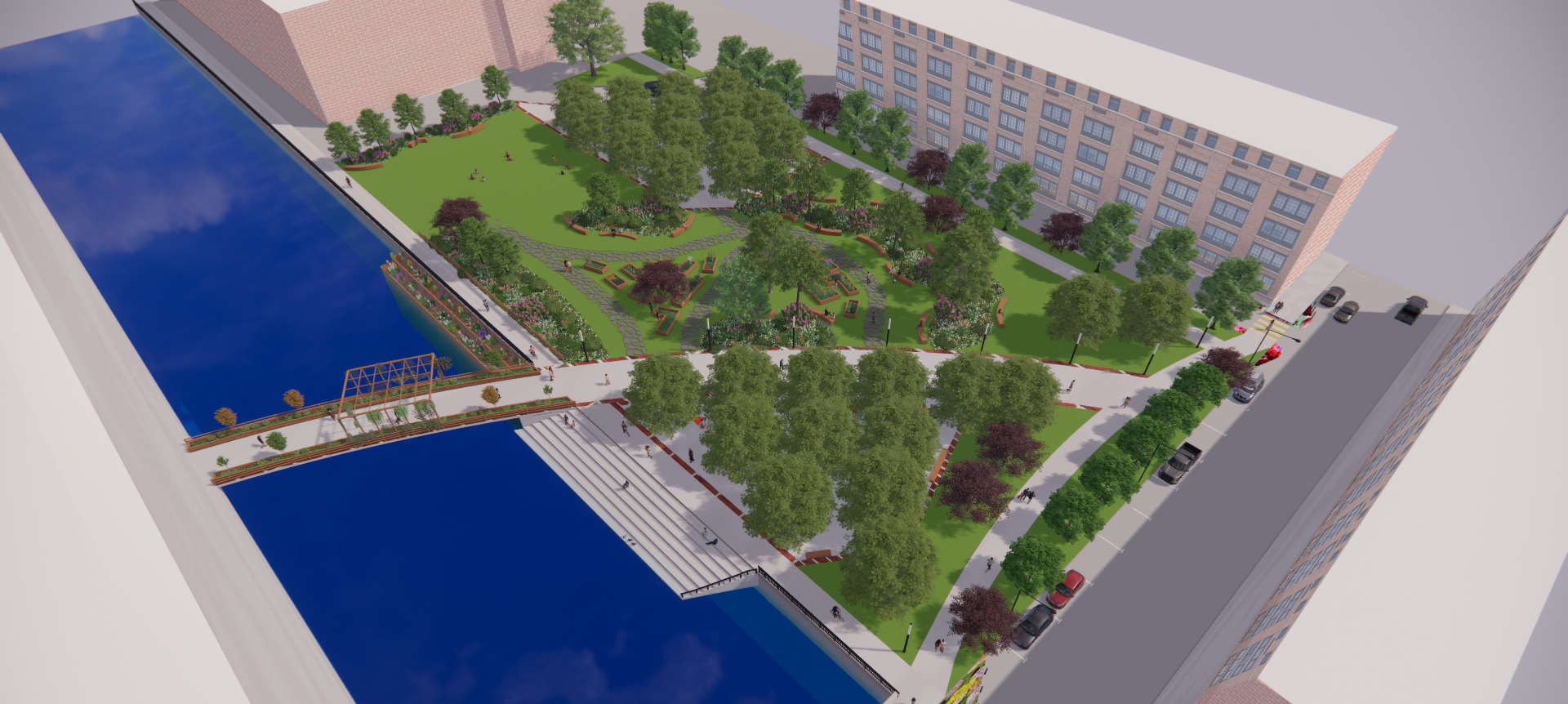
Birds Eye View of Curving Path
The design draws on Holyoke’s industrial heritage through material and form. A curving primary path traces the arc of the adjacent railroad that once shaped the city’s growth, while brick paving references the historic mill buildings and streets that define Holyoke’s urban fabric. Stone markers at the park entrances acknowledge the site’s history as the Farr Alpaca Company, honoring the workers who built, labored, and lived here while positioning the landscape as a space for new beginnings.
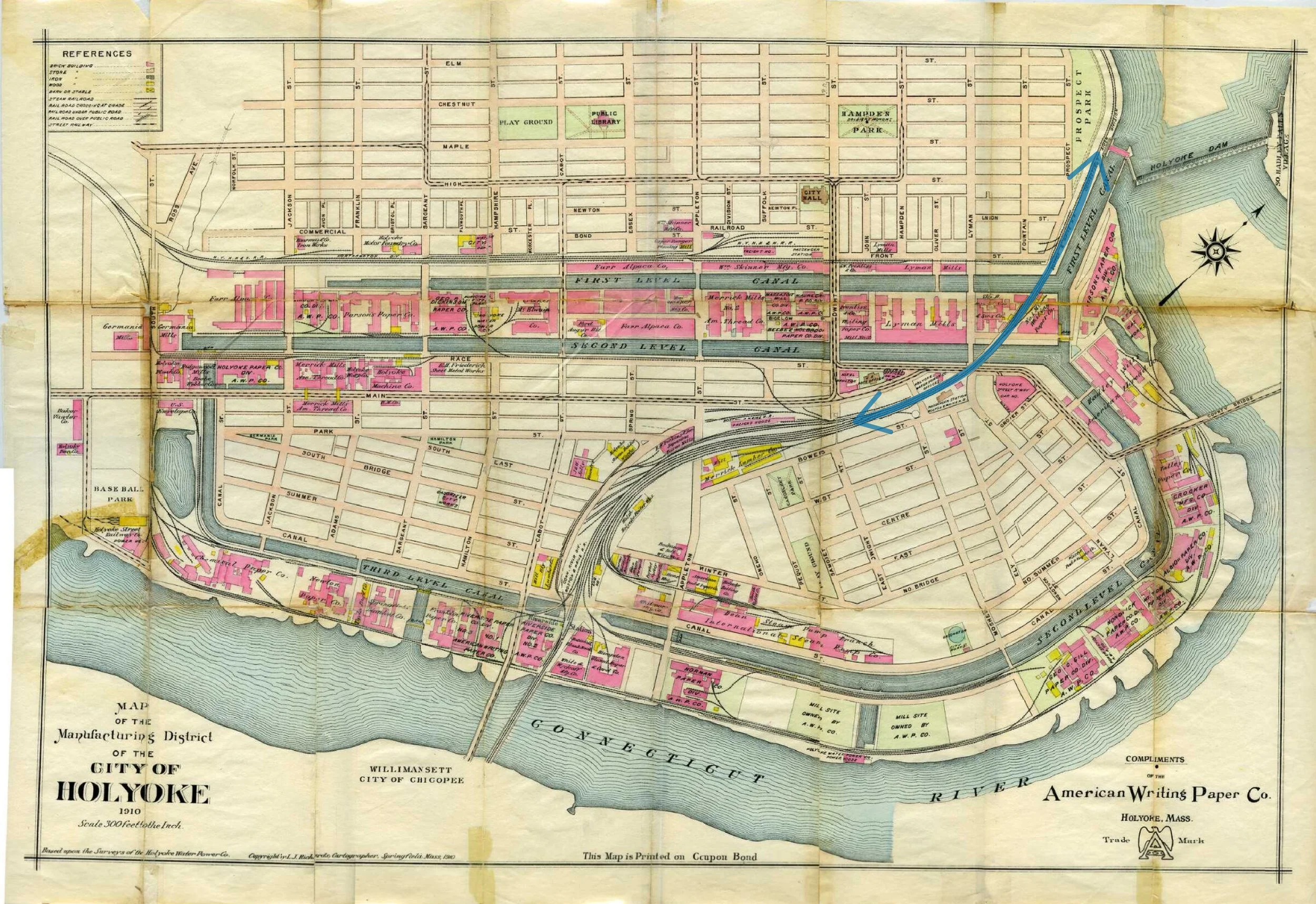
Map of Manufacturing District and Railroad Arc, 1910
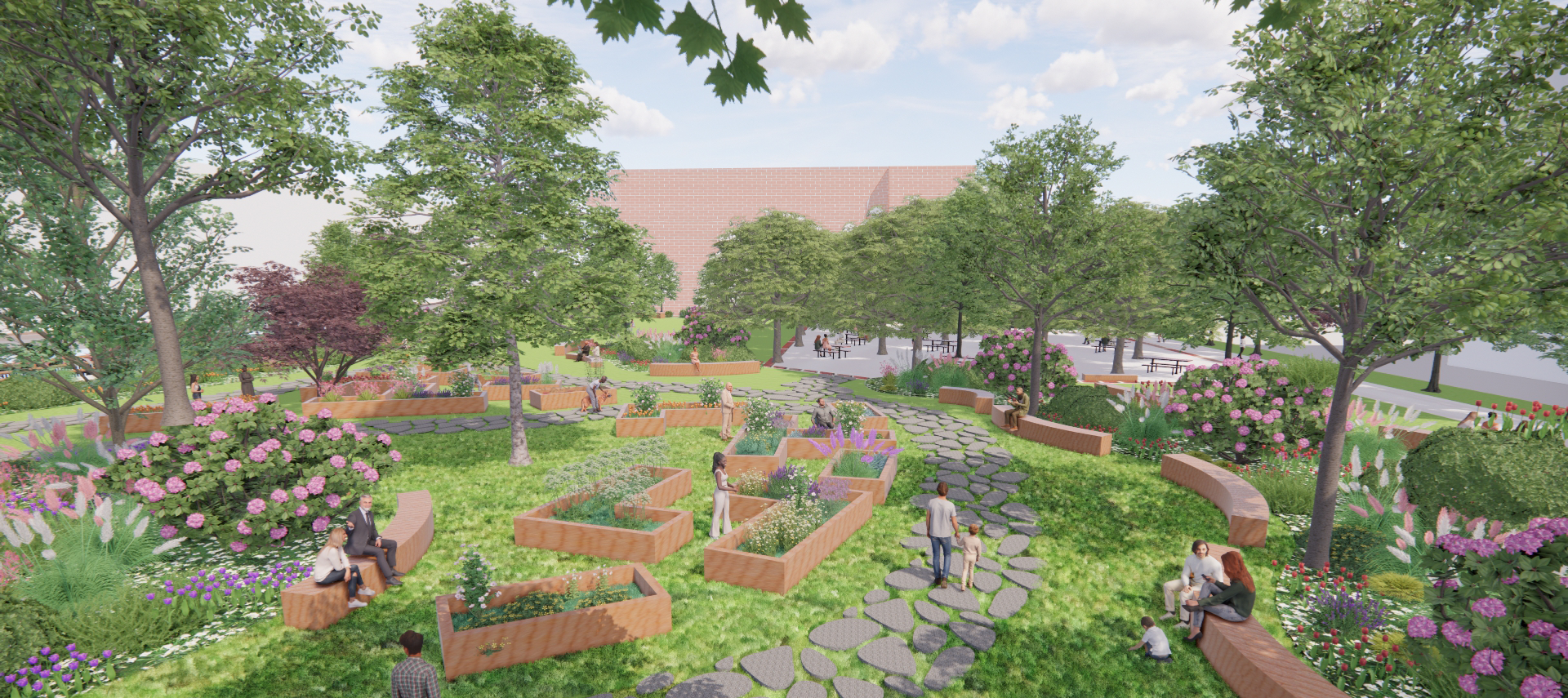
Views into Community Garden Space
The community garden provides a quiet, shaded retreat for nearby residents, including those living in the retirement community across the canal. Raised planting beds support accessible gardening, while benches and gently curving stone paths encourage rest, movement, and gathering. Lush flowering plantings define the garden’s edges, creating a sense of enclosure that supports both individual reflection and shared activity.
Community Garden
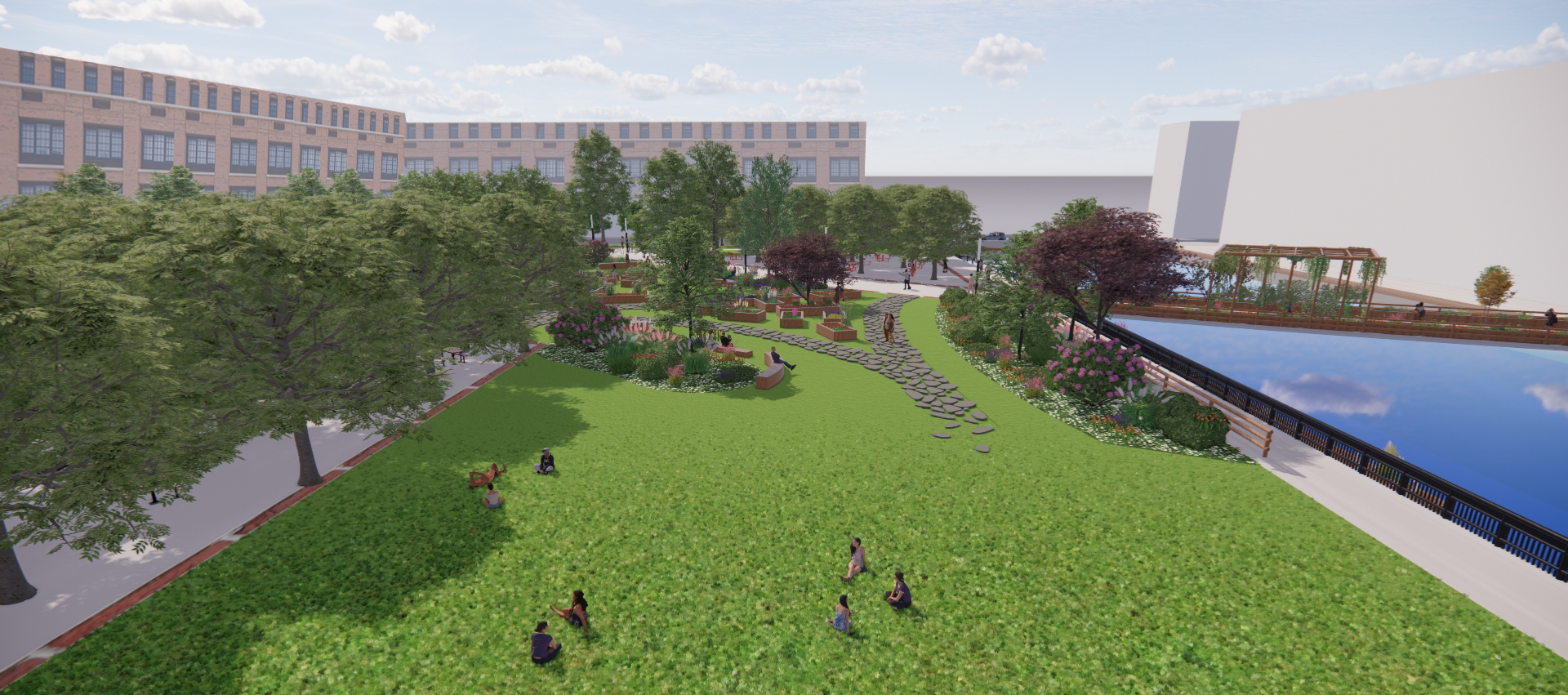
Goose Meadow & Food Truck Way
Goose Meadow and Food Truck Way form the park’s flexible social core. The open, sunlit lawn slopes gently toward the canal, accommodating picnics, informal gatherings, kite flying, and quiet relaxation while preserving expansive views of the water. Alongside the meadow, Food Truck Way provides a hub for food and social activity, with dedicated vendor access and shaded picnic seating beneath mature trees. Permeable, subtly elevated paving helps manage stormwater while protecting tree roots, balancing everyday use with the long-term health of the landscape.
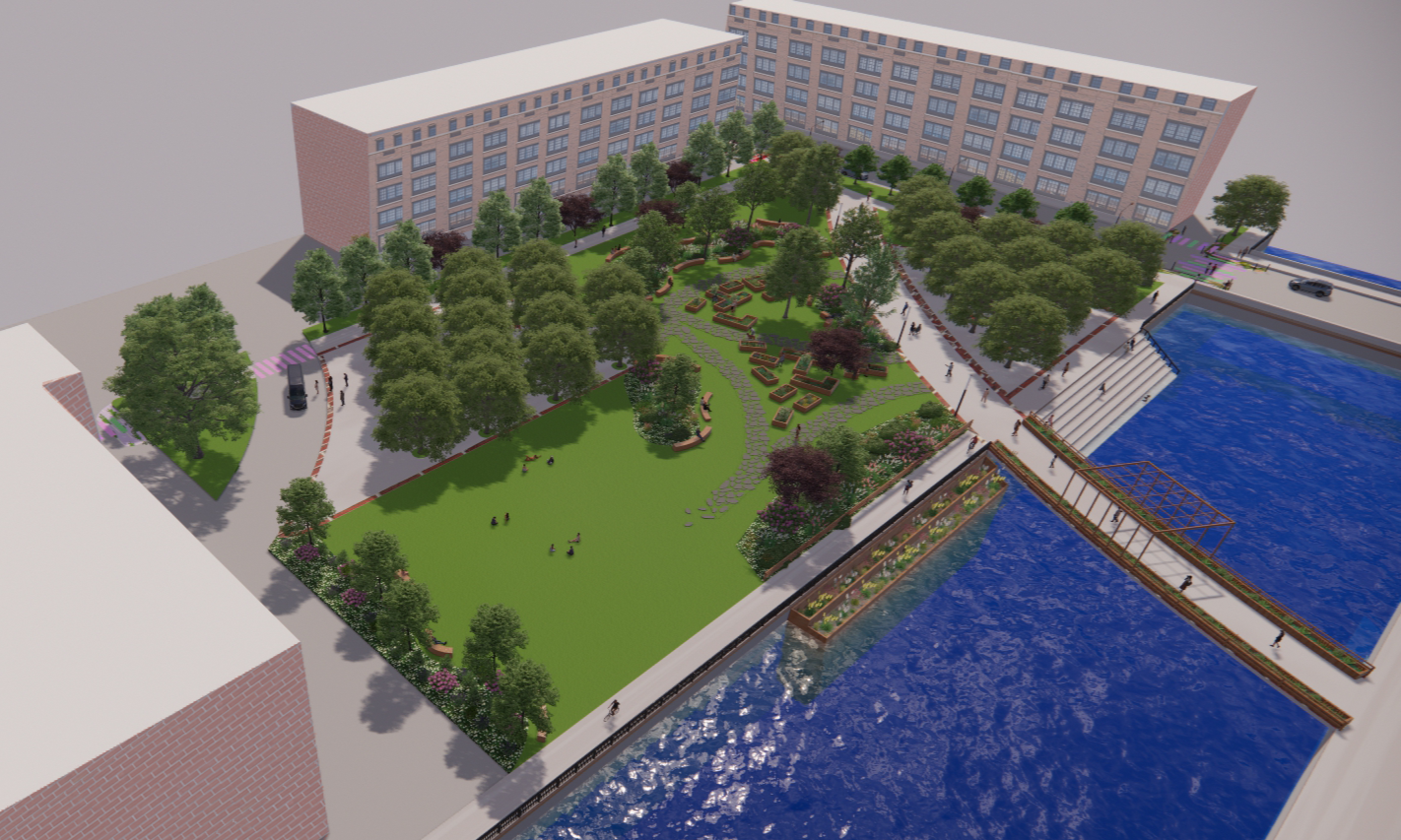
Bird’s Eye View of Goose Meadow
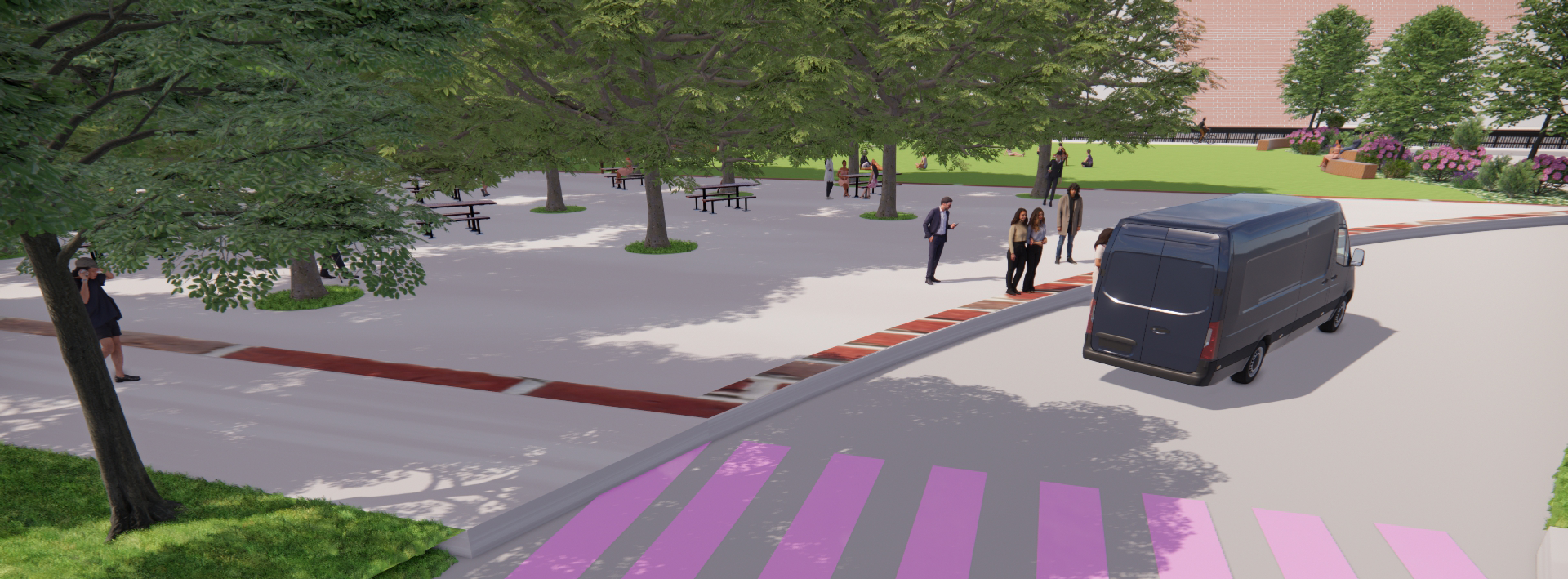
Views into Food Truck Way
Butterfly Bridge creates a safe, accessible connection between the retirement community and Sprout Park while functioning as an ecological corridor. Framed by canal views, the bridge incorporates raised planting beds and a vine-covered overhead terrace that provide shade and seasonal interest. Pollinator-friendly plantings attract butterflies, bees, and other beneficial insects, transforming a necessary crossing into a sensory-rich experience that connects people, habitat, and the surrounding landscape.
Butterfly Bridge
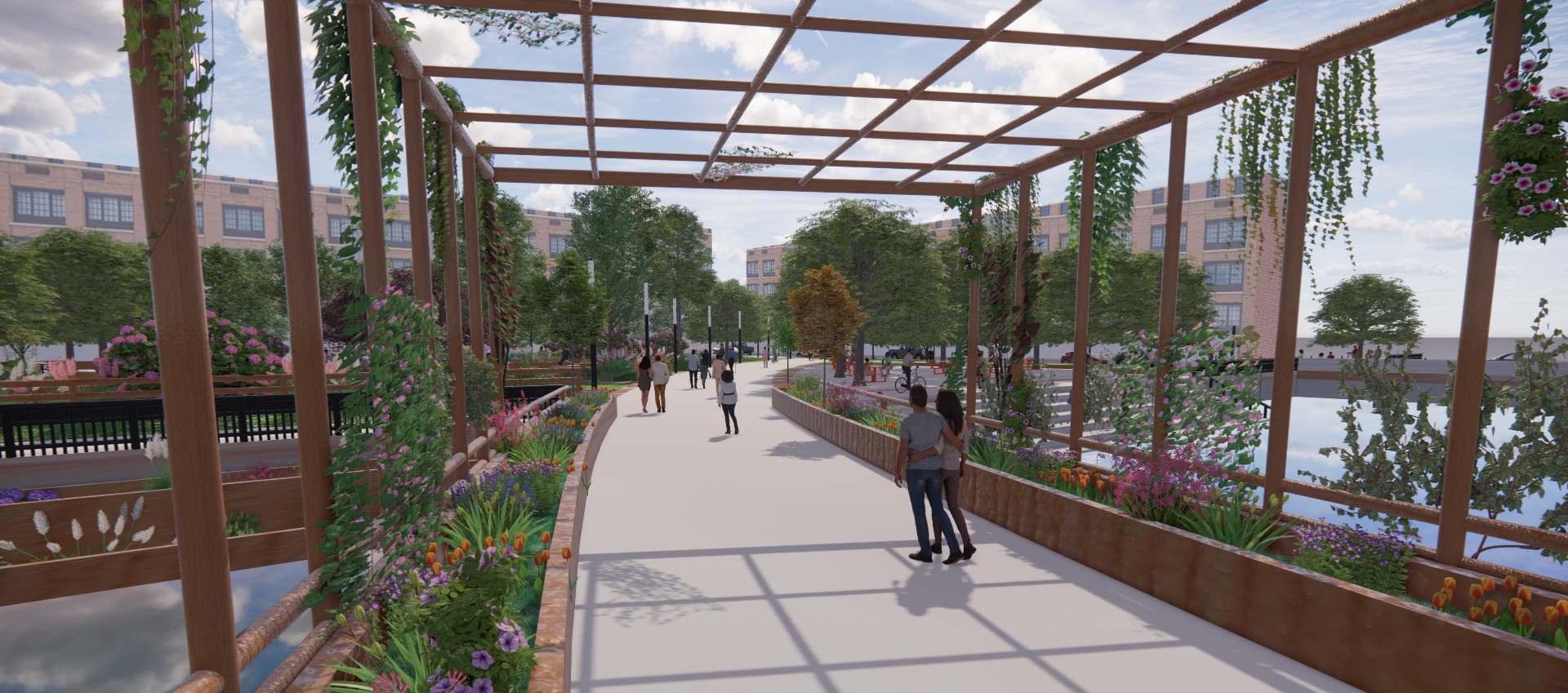
Views into Butterfly Bridge
A New Connection to the Canal
Together, these spaces reimagine the canal edge as more than a remnant of Holyoke’s industrial past. Through accessible gathering spaces, ecological planting, historic references, and opportunities for direct engagement with the water, Sprout Park creates a new relationship between the city and its waterways. The design celebrates the canal’s history while establishing a welcoming public landscape that can grow with the community and support its future.